
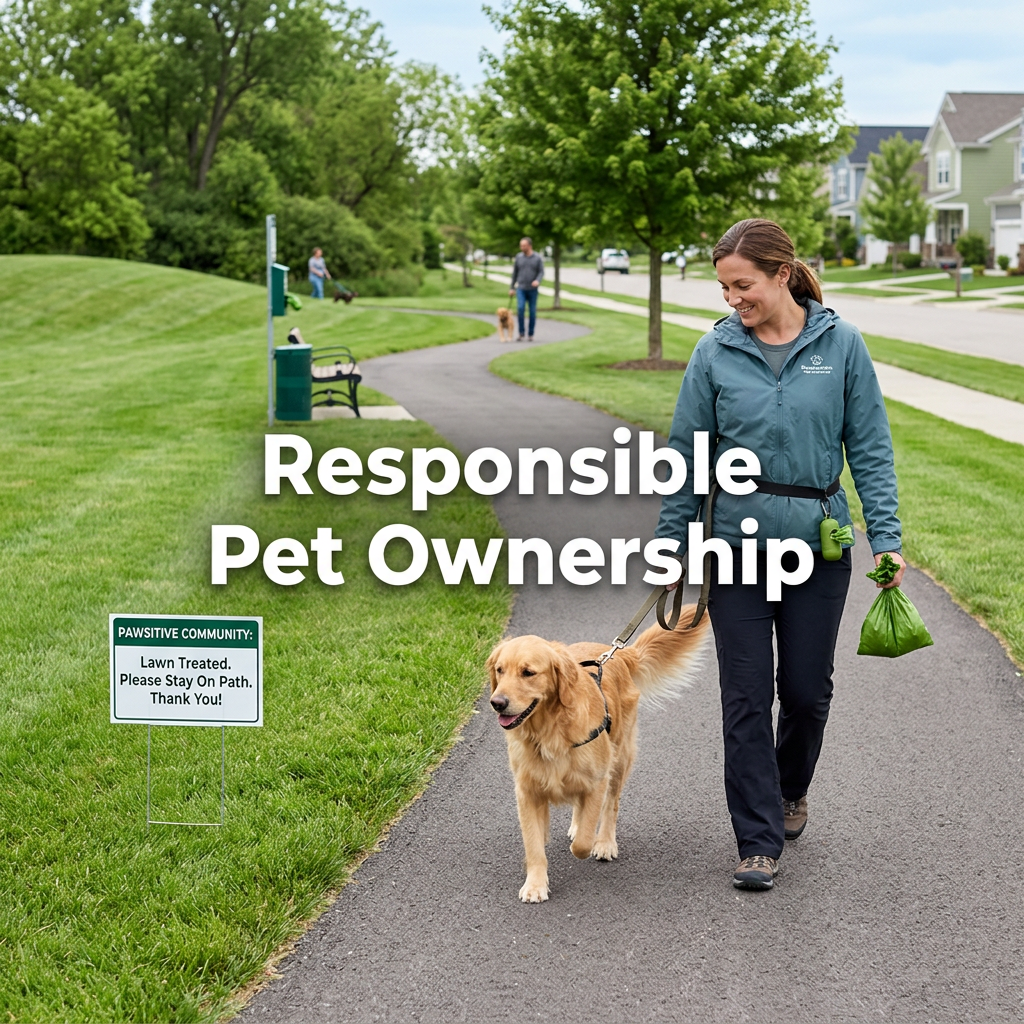

Responsible Pet Ownership: It’s More Than Picking Up the Poop 🐾
September 1, 2026

Responsible Pet Ownership: It’s More Than Picking Up the Poop 🐾

September is Responsible Dog Ownership Month — but responsible pet ownership is something we can practise all year long.

September puts a little extra spotlight on our canine companions with Responsible Dog Ownership Month, including a dedicated day of recognition during the month.


While the spotlight is on dogs, we think the bigger conversation is worth having with all pet parents. Many of the principles of responsible dog ownership apply just as much to our cats and other companion animals.


Because being a responsible pet parent isn’t simply about feeding your pet, taking them to the vet and remembering the poop bags.


It’s about thinking ahead.

It’s about understanding what your pet needs, knowing what resources are available in your community, considering the people and animals around you, and having a plan for those times when life doesn’t go exactly as expected.


At Paw’ty Waggin’, we see this from both sides.

We’re pet parents ourselves. We’re also professional pet-care providers who spend our days caring for other people’s beloved family members.

And over the years, we’ve learned something important:


Responsible pet ownership isn’t about being perfect. It’s about being prepared.


🐶 Before You Choose the Pet, Choose the Right Fit

Responsible ownership actually begins before the pet comes home.

It’s incredibly easy to fall in love with a puppy’s face, a kitten’s personality, or a particular breed you’ve always dreamed about.

But the question shouldn’t only be:

“Do I love this animal?”

It should also be:

“Can I provide the life this animal needs?”

The Canadian Kennel Club encourages prospective dog owners to research carefully and choose a breed that suits their needs and lifestyle. It also recognizes that dog ownership involves a significant long-term emotional and financial commitment, along with appropriate care, training and socialization.

That’s an important distinction.

Think about energy level before you think about the cute factor.

Imagine two very different dogs.

One is the type who wakes up ready to run, hike, explore and investigate everything.

They’re happiest when their human is heading out for a long trail adventure, and a quick stroll around the block isn’t going to cut it for their physical and mental needs.

Now picture another dog whose idea of a perfect afternoon is a short walk, some sniffing around the neighbourhood and then curling up beside you for a nap.

Both can be wonderful dogs.

But their humans may need to provide very different lifestyles.

A dog that needs substantial daily exercise and mental stimulation may struggle in a household where everyone works long hours and prefers quiet evenings at home.

Meanwhile, a lower-energy companion may be perfectly content with a household that doesn’t spend every weekend hiking mountains.

Of course, breed tendencies aren’t guarantees. Every dog is an individual. Age, health, personality, genetics, previous experiences and conditioning all influence what a particular dog needs.

The same principle applies to cats.

A young, highly active cat may need considerably more play, climbing, exploration and enrichment than a mature cat who is perfectly content supervising the household from their favourite chair.

Before bringing a pet home, ask yourself:

·        Energy: How much physical activity will they realistically need?

·        Exercise: Am I prepared for daily walks, runs, hikes or other activities if that’s what this individual dog requires?

·        Mental stimulation: What will keep their brain busy when we’re not outside?

·        Outdoor lifestyle: Do I actually enjoy hiking, exploring trails or spending time outdoors — or am I choosing a dog that expects me to?

·        Alone time: How long will they regularly be home alone?

·        Space: Does my home realistically accommodate their size and activity level?

·        Temperament: Does their typical temperament fit my household?

·        Other pets: How might they fit with the animals already living here?

·        Family: Are there children, seniors or others whose needs need to be considered?

·        Grooming: What ongoing coat and grooming care will they require?

·        Cost: Can I comfortably budget for veterinary care, food, grooming, equipment and unexpected expenses?

·        Future: What happens when life changes?

The goal isn’t to find the “best” breed.

It’s to find the best fit for your life and the individual animal.

Because the dog you chose because they looked adorable running through a mountain meadow may eventually be the dog standing at the door every morning asking:

“So… when are we hiking?” 😂

And if you’re someone who would rather spend Saturday morning with a coffee on the couch, that’s not necessarily a bad dog.

It might simply be a mismatch.

Responsible pet ownership starts with being honest about what you can realistically provide.

Cute is a wonderful starting point. Compatibility is the long-term goal.


🏠 Responsible Pet Ownership Includes Where You Live

Your pet doesn’t live in isolation.

They live in your home, your neighbourhood and your community.

For Fraser Valley pet parents living in apartments, townhomes, condominiums, rental properties and stratas, responsible ownership also means understanding the rules that apply to your home.

Before bringing a pet home, find out what applies to you.

That could include:

·        your tenancy agreement

·        your landlord’s pet policy

·        strata bylaws and rules

·        restrictions on the number or type of pets

·        pet-related deposits or requirements

·        common-area rules

·        designated pet areas

And remember that shared spaces really are shared.

The hallway, elevator, lobby, courtyard and parking area aren’t extensions of your living room.

Your dog may be thrilled to meet everyone in the elevator.

The person standing beside you may not be.

Responsible ownership means considering both.

We’ve previously talked about the importance of researching housing and strata considerations before bringing a pet into your household. It’s much easier to discover a restriction before you sign a lease or buy a home than after your four-legged family member has already moved in.


🔎 “My Dog Is Microchipped!”

Fantastic.

Now for the question that matters:

Is that microchip connected to you?

This is something we encounter during our Paw’ty Waggin’ Meet & Greets.

We commonly see EIDAP microchips, along with other brands and identification systems. For the average pet parent, however, the brand name isn’t necessarily the important part.

Think of a microchip as a permanent identification number.

It isn’t GPS.

It doesn’t tell anyone where your dog is.

And it doesn’t automatically call you if your pet goes missing.

The BC Pet Registry explains that a microchip is a small electronic transponder that is activated by a scanner and transmits an identification number. It is not GPS and cannot trace an animal’s location.

The number then needs to be connected to your current contact information through a registry.

The simple version:

Microchip → Registry → Your current contact information → A better chance of getting home

The BC Pet Registry is owned and operated by the BC SPCA. Pet guardians can register a microchip, tattoo and/or licence number, and participating animal-care organizations can use registry information when a lost pet is found.

And here’s something many pet parents don’t realize:

Having a microchip from another provider or registry doesn’t necessarily mean you can’t use the BC Pet Registry.

The BC Pet Registry explains that an existing microchip can be registered with its system as well. Having identification registered in more than one place may increase the chances of being reunited, provided the contact information is kept current.

Your five-minute responsible-pet check:

Do you know your pet’s microchip number?

Do you know which registry it’s connected to?

Is your current phone number attached to it?

Is your email address current?

Moving house?

New phone number?

New email?

Update the pet information, too.

Your pet can’t do it for you.


🏷️ A Dog Licence Is More Than a Fee

Let’s talk about another one that can sometimes get the:

“Ugh, another fee?”

reaction.

Dog licensing.

In the Fraser Valley, dog licensing is part of responsible ownership, and the requirements and administration are handled through the Fraser Valley Regional District. In Abbotsford, dogs four months and older must be licensed.

But here’s the part that can change the way we think about that licence:

It’s part of your dog’s safety net.

A current licence provides another form of identification if your dog gets loose or is found away from home.

The FVRD also explains that licensing supports animal-control services in the community.

So instead of thinking:

“I’m paying for a tag.”

Think:

“I’m helping support the system that helps dogs like mine get home.”

That’s a pretty different perspective.

And just like a microchip, a licence works best when the information connected to it is accurate.


🐾 The Local Safety Net: Who Does What?

If your dog ever goes missing, you don’t necessarily know where the story will end.

They might be found by a neighbour.

They might be taken to a veterinary clinic.

They might be picked up by Animal Control.

They may temporarily end up at the FVRD Community Animal Response & Education (CARE) Centre, which provides temporary housing and care for lost, stray and impounded dogs while their situation is addressed.

Meanwhile, identification systems such as your dog’s licence and microchip can help connect that animal back to their family.

These aren’t all one organization.

They’re different pieces of a community safety net.

And our job as pet parents is to make those pieces work as effectively as possible:

Licence your dog.

Microchip your pet.

Register the identification.

Keep your information current.

Use identification tags.

Know who to contact if your pet goes missing.

A little preparation before something goes wrong can make a very big difference afterwards.


🌲 Responsible Ownership Doesn’t Stop at the Front Door

One of the best things about living in the Fraser Valley is having so many places to get outside with our dogs.

But beautiful parks and trails come with a little responsibility of their own.

Abbotsford’s trail guidance asks users to stay on designated trails, respect the privacy of people living adjacent to trails, keep dogs on leash except on designated off-leash trails, keep pets under control and clean up after them.

These aren’t random rules designed to ruin anyone’s fun.

They’re there because trails are shared spaces.

You might encounter:

🚶 walkers
🏃 runners
🚲 cyclists
👨‍👩‍👧 families
🐕 dogs who need space
🦌 wildlife
🏡 homes beside the trail

And not every dog wants a social introduction.

One of our favourite reminders:

Friendly doesn’t always mean invited.

Your dog may genuinely love everyone.

Another dog may be nervous.

Another may be elderly.

Another may be reactive.

Another may simply be having a day where they don’t want to say hello.

Giving space is responsible dog ownership.


🐕 Off-Leash Doesn’t Mean Out of Control

Abbotsford has designated off-leash areas where dogs can run without a leash.

That’s fantastic.

But off-leash doesn’t mean unsupervised.

The City of Abbotsford says dogs in designated off-leash areas must remain under the control of and within sight of their handlers. Handlers must also carry a leash for each dog and leash their dogs before leaving the designated area.

In other words:

Off leash ≠ off duty.

Put down the phone.

Watch your dog.

Know their body language.

Know when they’re getting overstimulated.

And know when it’s time to pack it in and head home.


💩 And Yes… We’re Going to Talk About Poop

Because responsible dog ownership has to include the humble poop bag.

We’d also like to take this opportunity to thank Abbotsford Parks, Recreation & Culture for helping support responsible dog ownership by providing dog-waste bag dispensers in many local park and trail areas.

Those dispensers are a great community resource.

But they’re a backup — not our entire poop-bag strategy.

Carry your own.

Use the dispensers when you need one.

And please put the bag where it belongs.

The City of Abbotsford encourages pet guardians to pick up after their dogs and properly dispose of the waste.

Every pile picked up means a cleaner park, trail or sidewalk for the next person.

And that’s something everyone can get behind.


Responsible Ownership Also Means Planning for the Days You’re Busy

Here’s one we think deserves much more attention.

You can absolutely love your dog and still have a busy life.

Maybe you:

·        work long hours

·        commute

·        work shifts

·        have children

·        travel for work

·        have appointments

·        have an unpredictable schedule

Your dog doesn’t understand your calendar.

They just know when they’re hungry, when they need to go outside, when they need exercise and when they need companionship.

That doesn’t mean you should feel guilty for having a life.

It means you may need a plan.

For one dog, that might mean a midday potty break.

For another, it might mean a regular walk.

For a cat, it could mean arranging someone to provide food, fresh water, litter care, medication when required and some companionship while you’re away.

Responsible pet ownership isn’t:

“I must do everything myself.”

It’s:

“I need to make sure my pet’s needs are met.”


✈️ Book Your Pet Care Before Your Suitcase Is Packed

Here’s a scenario professional pet-care providers know very well:

Flights booked.

Hotel booked.

Activities booked.

Calendar cleared.

Suitcase out.

Then suddenly:

Oh… who’s looking after the dog?”

This is where planning ahead matters.

Professional pet-care providers can book well in advance, particularly around summer holidays, school breaks, long weekends, Christmas and other high-demand periods.

At Paw’ty Waggin’, depending on the season and service, we’re often planning our schedules a month to a quarter ahead.

That’s not us saying:

“Look how busy we are!”

It’s us saying:

Please don’t make your pet’s care the afterthought.

Before you finalize that getaway, check whether your preferred pet-care provider is available.

Because when your first choice is already booked, you may find yourself making a rushed decision simply because you need someone.

And rushed pet-care decisions aren’t ideal for anyone.

A better order of operations:

Pick your dates.

Check pet-care availability.

Confirm your pet’s care.

Then finalize the rest of your getaway.

Your pet’s care should be part of the travel plan — not something added to the bottom of the packing list.


🇨🇦 What Responsible Pet Ownership Means to Us

By now, you may have noticed that we keep coming back to one word:

Planning.

The Canadian Kennel Club’s guidance around responsible dog ownership encourages pet parents to understand the long-term commitment involved, provide appropriate care, training and socialization, take responsibility for their dog’s actions and support responsible identification and licensing.

We think those principles extend beyond dogs.

Responsible pet ownership means understanding the long-term commitment to the animal you’ve brought into your life and making thoughtful plans to meet their needs throughout that life.

And that includes planning for the times when you aren’t the person providing the care.

🐾 This Is Where Our Role Comes In

At Paw’ty Waggin’, responsible pet care starts before the first walk or pet visit.

During our complimentary Meet & Greets and onboarding process, we gather important information about our clients’ pets and households.

That can include things such as:

·        identification information

·        municipal licence information, where applicable

·        veterinary and emergency contact information

·        household and access information

·        your pet’s routines and needs

·        feeding and medication instructions

·        behaviour and handling considerations

·        emergency and backup-care information

Why?

Because when we’re caring for your pet, we need to be prepared for more than the ordinary day.

We need to know who to contact if something unexpected happens.

We need to know where important information can be found.

We need to understand your pet well enough to notice when something isn’t quite right.

And we need a plan for those what if? moments.

What if you can’t be reached?

What if your pet needs veterinary attention?

What if there’s an emergency at your home?

What if your regular routine suddenly changes?

Having accurate information in your client file isn’t just administrative housekeeping.

It’s part of responsible professional pet care.

It’s one of the ways we prepare to advocate for and care for your pet when you’re not there to do it yourself.

And that’s why we encourage pet parents to keep us updated when important information changes.

New phone number?

New veterinarian?

New emergency contact?

New medication?

New pet routine?

Please tell us.

The more current the information, the better prepared we are to care for your family member.


🌲 Respecting the Place We Walk

There’s another part of responsible pet ownership that is particularly important to us as a company.

Where we walk matters.

Paw’ty Waggin’ is a Métis-owned business, and our relationship with the land we live, work and play on is something we take seriously.

When we’re out walking our clients’ dogs, we’re not simply moving from Point A to Point B.

We’re guests and community members sharing these spaces with other people, animals and the natural environment.

That means our team is expected to practise the same trail etiquette we encourage our clients to follow.

We:

Respect posted rules and leash requirements.

Stay on designated trails where required.

Give other dogs and people space.

Respect neighbouring properties.

Watch the dogs in our care.

Pick up after the dogs we walk.

Dispose of waste properly.

And yes, that last one means we’re carrying plenty of poop bags. 😂


💩 Every Walk Comes With a Responsibility

We appreciate the work that Abbotsford Parks, Recreation & Culture puts into supporting our community’s parks and trails, including providing dog-waste bag dispensers in many areas.

Those dispensers make it easier for everyone to do the right thing when they’re out enjoying the community.

But responsible dog ownership doesn’t stop at having access to a bag.

We pick it up.

We carry it out.

We put it where it belongs.

It’s a small action, but multiplied by thousands of dogs using our parks and trails, it makes a very real difference.

And this isn’t just something we ask of our clients.

It’s part of our team onboarding, training and company expectations.

Because when we’re representing Paw’ty Waggin’ in the community, we’re responsible for more than the dog on our leash.

We’re also responsible for the footprint we leave behind.

As a Métis-owned company, respecting the land we live and play on is part of how we want to show up in our community.


🐾 Responsible Care Is a Team Effort

One of the things we love most about professional pet care is that responsible pet ownership doesn’t have to mean doing everything alone.

Your pet’s care team might include:

You — their family and primary guardian

Your veterinarian — their health-care professional

Your groomer — when grooming is part of their needs

Your trainer or behaviour professional — when additional guidance is helpful

Your pet-care professional — when you need someone to provide care while you’re away

Your community resources — when identification, licensing, animal control or other support is needed

Everyone has a role.

And good communication between those pieces helps create a stronger safety net for the animal at the centre of it all.

Your pet.


🧠 Responsible Pet Ownership Doesn’t Mean Knowing Everything

This is another area where we want to take the guilt out of pet parenting.

There is a lot of information out there.

Sometimes too much.

And if you’ve ever searched:

“How do I train my dog to…”

you already know what happens next.

Twenty-seven opinions.

Fourteen contradictory videos.

Three heated arguments.

And somehow you feel like you’re failing because your dog didn’t read the same manual.

We don’t think responsible ownership means subscribing to one particular training philosophy.

It means continuing to learn, understanding your individual pet and seeking appropriate professional help when you need it.

We also believe it’s important to recognize that different pets and households can have different needs. Responsible ownership shouldn’t be about shaming a pet parent because their dog isn’t behaving exactly like someone else’s dog.

Our own professional standards are grounded in animal welfare, safety, humane and respectful handling, ongoing education, transparency and recognizing when a pet may be experiencing distress, illness or discomfort. Those principles are reflected in the Canadian Pet Care Professionals Code of Ethics.

That’s a standard we value.

And it’s one reason we believe pet parents should feel comfortable asking questions rather than feeling embarrassed that they don’t have all the answers.


❤️ Responsible Doesn’t Mean Perfect

We want to leave you with this:

Your dog doesn’t need a perfect human.

Your cat doesn’t need a perfect human.

They need a human who is willing to learn, plan, adapt and care.

Responsible pet ownership isn’t about doing everything yourself.

It’s about making sure your pet’s physical, emotional and social needs are considered throughout their life.

Sometimes you’re the one providing that care.

Sometimes you need a veterinarian.

Sometimes you need a trainer or behaviour professional.

Sometimes you need a pet-care professional.

Sometimes you need your neighbour.

Sometimes you need the community systems designed to help when things don’t go according to plan.

And that’s okay.

Being a responsible pet parent means knowing when you can do it yourself — and when it’s time to build your pet’s care team.

That’s not failure.

That’s planning.

That’s preparation.

And, quite frankly…

That’s responsible pet ownership. 🐾


🐾 Your Responsible Pet Parent Check-In

Whether you’re reading this during Responsible Dog Ownership Month or six months from now, take a few minutes to ask yourself:

    Is my pet’s identification current?

    Do I know their microchip number?

    Is their registry information current?

    Is my dog’s municipal licence current?

    Do I understand the pet rules where I live?

    Am I following local park and trail rules?

    Do I have a plan for long workdays?

    Do I have a plan for holidays and getaways?

    Do I have a backup caregiver?

    Does someone else know how to care for my pet if I’m unavailable?

    Have I given myself enough lead time to arrange professional pet care?

    Have I updated my pet-care provider if important information has changed?

If you answered “no” to one or two, don’t beat yourself up.

You’ve simply found your next responsible-pet-parent project.

One paw at a time. 🐾


🐾 A Little Paw’ty Waggin’ Reminder

Don’t wait until your suitcase is packed to think about your pet’s care.

If your calendar is filling up, your work schedule is changing, or you’re planning a getaway, start the conversation early.

Because responsible pet care isn’t about being available 24/7.

It’s about making sure your pet is cared for even when you can’t be the one doing it.

And that’s one of the many ways we help Alleviate Pet Parent Guilt.

Warm Wags,
The Paw’ty Waggin’ Team


Want to Dig a Little Deeper?

We’ve included some Canadian and local resources for pet parents who want to learn more:

Canadian Kennel Club — Responsible Dog Ownership
Learn more about responsible dog ownership, choosing a dog that fits your lifestyle and the long-term commitment involved.
https://www.ckc.ca/en/Raising-My-Dog/Responsible-Ownership

BC Pet Registry
Learn about microchipping, permanent identification and keeping your pet’s guardian information current.
https://bcpetregistry.ca/about-us-bc-pet-registry/ . Learn about the Grant Program.

Fraser Valley Regional District — Animal Control
Find local information about dog licensing, animal control and the CARE Centre.
https://www.fvrd.ca/EN/main/services/animal-control.html or https://www.fvrd.ca/EN/main/parks-recreation/parks-trails.html

City of Abbotsford — Parks & Trails
Explore local trails, parks and expectations for responsible use with your pet.
https://www.abbotsford.ca/trails

City of Abbotsford — Dog Off-Leash Areas
Learn about designated off-leash areas and local requirements for keeping dogs under control.
https://www.abbotsford.ca/dog-off-leash

Canadian Pet Care Professionals — Code of Ethics
Learn more about the professional standards that guide our approach to animal welfare, safety, education and ethical pet care.
https://petcareprocanada.ca/code-of-ethics/

Because responsible pet ownership is a lifelong commitment — and there’s always something new to learn. 🐾

August 2, 2026
ILet’s be honest—2025 (and beyond) is looking pretty amazing for pet parents. From selfcleaning litter boxes to automatic feeders and Wi-Fi-connected water fountains, we’ve entered an era where caring for our furry family members has never been more *innovative* or *convenient*. And we’re all for it! But here’s the truth: **tech doesn’t replace human touch**. Especially when it comes to daily connection, safety, and emotional care. At **Paw’ty Waggin’**, we’ve proudly served **Abbotsford and the Fraser Valley** since 2017. While we absolutely love the latest pet care gadgets, we’ve seen firsthand the irreplaceable value of real, compassionate, **face-to-snout care**. Tech is great—**but pets still need people**. Here’s why mixing smart tools *with* professional, in-person care makes all the difference. Cats Are Independent—But That Doesn’t Mean They Don’t Need You We hear it all the time: *“I have a cat. They’re fine on their own for a day or two.”* Sure, cats are famously self-sufficient—but that doesn’t mean they should be left alone without daily care. Litter boxes still need scooping. Auto-feeders may jam. Water fountains might run— but have a funky filter that needs fixing. And if your cat’s routine is even slightly disrupted? You could end up with a stressed-out kitty who refuses the litter box or hides under the bed for hours. A reliable sitter who visits daily can spot issues quickly, refill or clean things as needed, and offer your pet the gentle routine they love—without the stress of uncertainty. Don’t Let Smart Tools Fool You—They Still Need a Human Backup Yes, **the Litter-Robot**, **smart feeders**, and **fancy fountains** are total game-changers. Many are even **battery-powered**, which helps if there's ever a power interruption. But that doesn’t make them fail-proof. Here’s the thing—**most smart pet gadgets rely on Wi-Fi**. If there’s a weak connection, your camera feed might cut out, notifications might glitch, or settings might not update. You wouldn’t even know something went wrong while you’re out hiking Chilliwack Lake or enjoying a cozy getaway in the Okanagan. On top of that? Filters get clogged. Feeders run low. Batteries die quietly in the background. Daily visits from a pet sitter ensure everything keeps working properly—*and* your pet doesn’t miss a beat in the process. Fraser Valley Winters Can Be Unpredictable—Tech Can’t Shovel a Path or Calm a Nervous Pet While we don’t exactly get brutal -40°C winters here in the **Fraser Valley**, **Abbotsford’s damp, icy, and windy winter weather** still makes things a little trickier when it comes to reliable routines. Doggy doors might get stuck with mud and frost. Your pup’s heated bed might stop working. Or Wi-Fi might go out during a stormy evening. A sitter ensures your pets are safe, warm, and comfortable—**regardless of what the sky is doing.** No app will spot the furnace quitting or your cat curling up far too still under the sofa in a chilly hallway. But a trained professional absolutely will. Emotional Care Can’t Be Automated Whether it's your attention-loving cat or your hyper social dog, **no gadget or app can replace real companionship**. Yes, cameras let you say hi. Automatic toys throw the ball. Dispensers drop the treats. But at the end of the day, pets need **real interaction**. Someone to read their body language. Offer affection. Play how they like to play. Tell when something’s off.  Daily pet visits give your furry friend comfort, stimulation, *and* something exciting to break up their day when you’re away. Emotional wellness is just as important as food and water—and yet, it’s something only **humans can offer**.

July 10, 2026
If you’ve been watching the news or scrolling through your community Facebook groups recently, you’ve probably come across headlines or friendly warnings about *blue-green algae* in BC lakes this summer. From local vets to regional health authorities, concerns have been growing around this not-so-pretty bloom that surfaces when the weather heats up—especially where pets are involved.
June 17, 2026
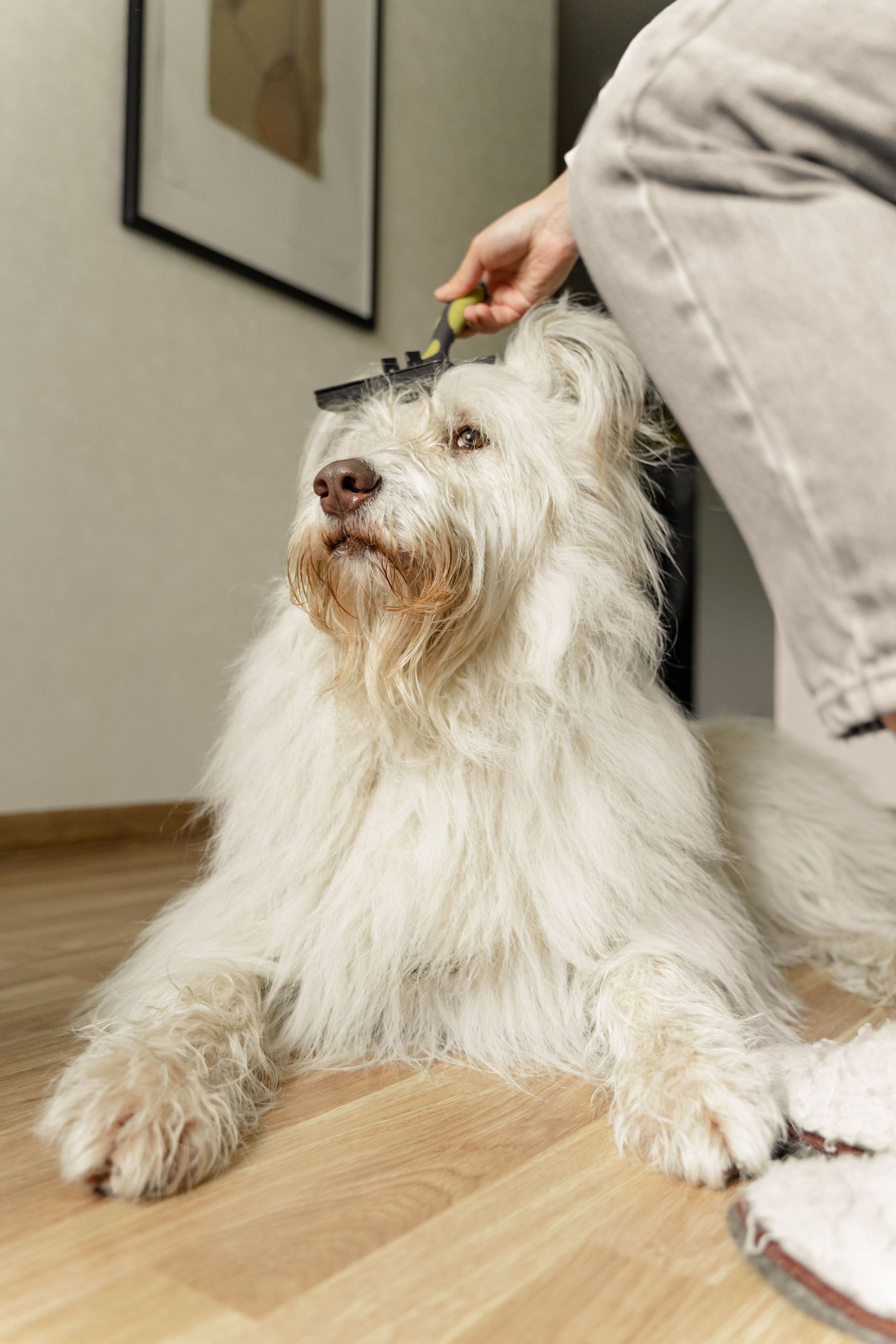
Should You Shave Your Dog in the Summer? (Spoiler: Not Always!)
April 22, 2026
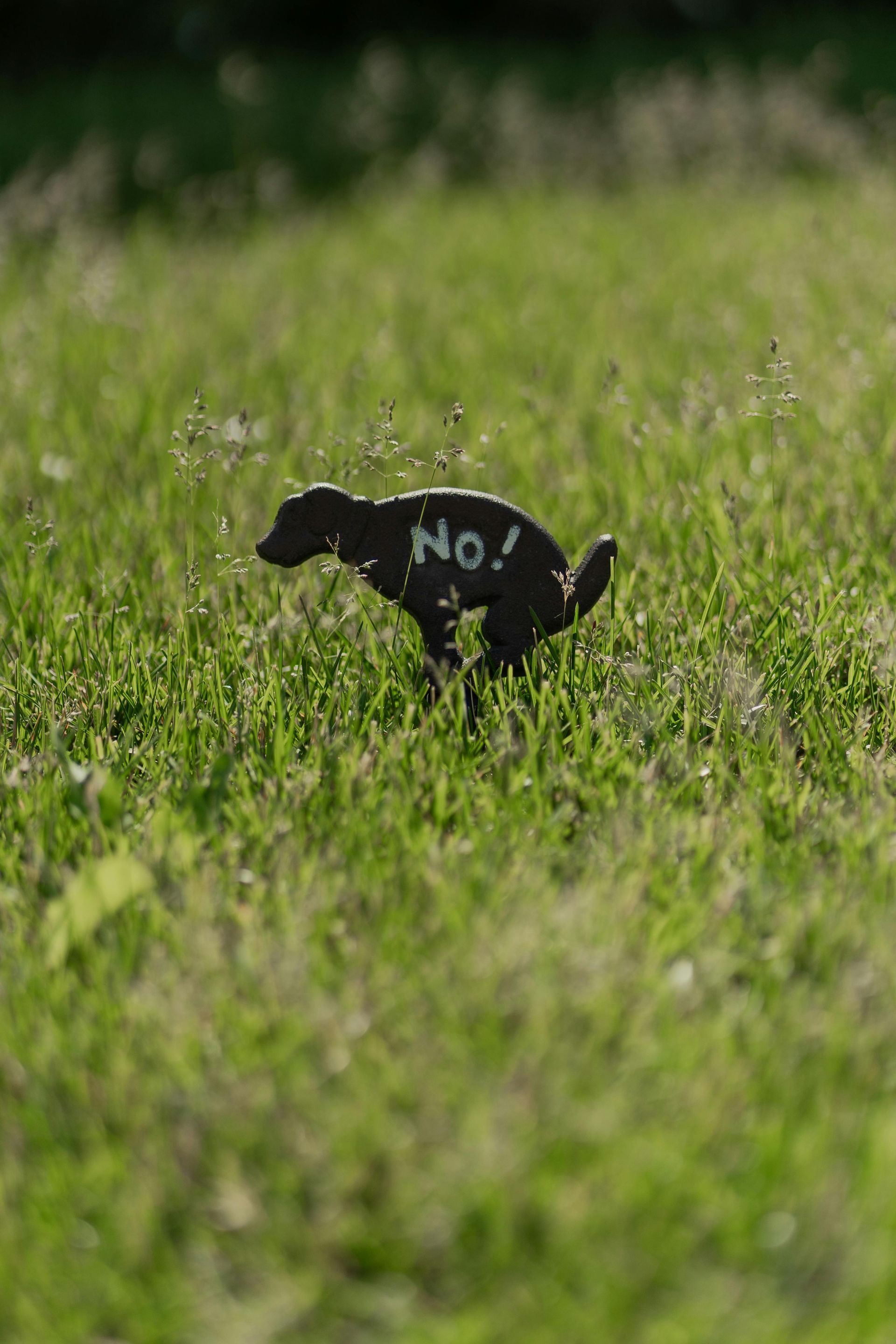
Simple ways to stay on top of pet waste:

A grey tabby cat with folded ears peeks out from beneath a brown textured blanket on a soft, light-colored surface.
March 20, 2026
As humans, we love when spring Daylight Savings Time comes around. Our days stay brighter, get longer, and it means the glorious seasons of Spring and Summer are just around the corner. Feels like heaven, right?  Sadly, it doesn’t have all the same great benefits for our pets! They don’t live their days by the time on the clock like us. For some pets, even slight changes in their daily routines can leave them feeling hungry or confused. Here are a few tips on helping your pet adjust to the adjustments that come with Daylight Savings Time.

A smiling bride and groom sitting in a sunny field with a black and white dog wearing a bow tie.
February 14, 2026
Make Every Moment Count: Let Your Pets Share Your Wedding Day

January 20, 2026
Beyond the Basics: Pet Care Done Right